
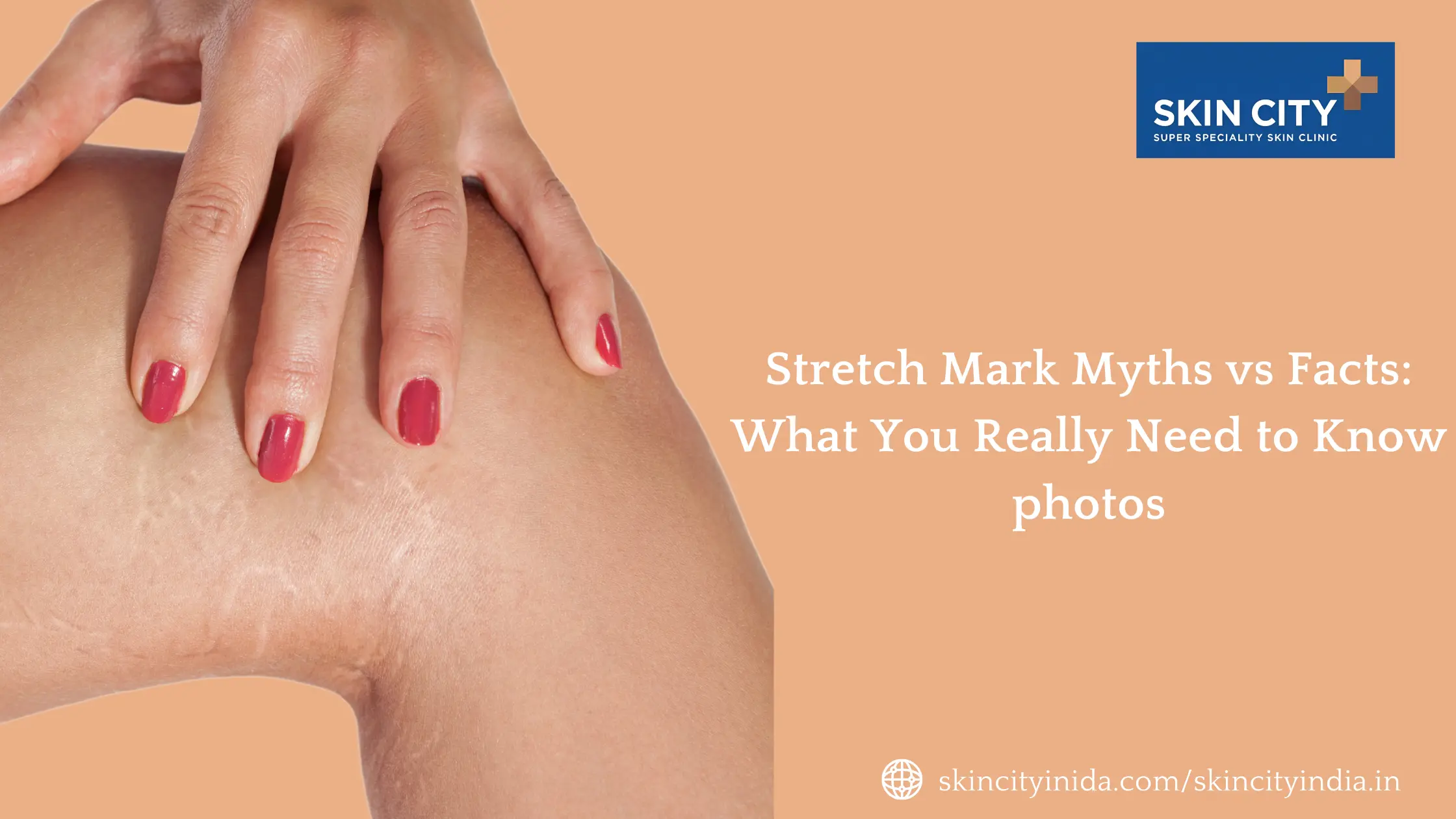
Stretch Mark Myths vs Facts: What You Really Need to Know.
Introduction
Stretch marks are a
common skin condition that many people experience at some point in their lives. Whether
it's due to pregnancy, rapid weight gain, or puberty, stretch marks can appear on the
skin in the form of red, purple, or white streaks. However, there are several myths
surrounding stretch marks that can lead to confusion and misconceptions. In this blog,
we’ll debunk the myths and provide you with the facts you really need to know about
stretch marks, how they occur, and how to treat them.
Stretch Marks Only Affect Women
Stretch marks are not exclusive to women. While they are often associated with
pregnancy, men can also develop stretch marks, especially during rapid muscle growth,
weight gain, or puberty. In fact, bodybuilders are prone to stretch marks due to the
fast development of muscles that cause the skin to stretch. Therefore, both men and
women can experience stretch marks, especially in areas like the thighs, arms, back, and
abdomen.
Stretch Marks Are Only Caused by Pregnancy
Although pregnancy is a common cause of stretch marks, it is not the only reason they
occur. Stretch marks can develop whenever the skin is stretched too quickly, which
happens during rapid weight gain, puberty, muscle building, or hormonal fluctuations.
Corticosteroid medication can also lead to stretch marks due to the thinning of the
skin. The key factor is rapid stretching of the skin beyond its normal capacity, which
results in collagen damage and the formation of stretch marks.
Stretch Marks Are Permanent and Cannot Be
Treated
While it’s true that stretch marks might not completely disappear, they can be treated
to reduce their appearance. With consistent treatment, stretch marks can fade
significantly and blend more naturally with the surrounding skin. Treatments like
topical creams containing retinoids, hyaluronic acid, and vitamin E can improve skin
texture by stimulating collagen production. Additionally, professional treatments like
microneedling, laser therapy, and chemical peels are effective in reducing the
visibility of stretch marks. These treatments work by promoting skin regeneration and
improving the overall appearance of the skin.
Moisturizing Prevents Stretch Marks
While moisturizing is essential for skin hydration, it does not prevent stretch marks.
Stretch marks occur when the skin is stretched rapidly beyond its elastic limit, causing
damage to the underlying tissues. While moisturizing can help maintain skin elasticity,
it doesn’t prevent the skin from stretching too quickly, which is the main cause of
stretch marks. However, keeping your skin well-moisturized can help with the healing
process and make the skin appear smoother and less dry after the marks have formed.
Only Overweight People Get Stretch
Marks
Stretch marks are not exclusive to individuals who are overweight. They can affect
anyone, regardless of body size, who experiences rapid skin stretching. For instance,
teenagers going through puberty may develop stretch marks as they grow quickly in
height. Similarly, athletes and bodybuilders often experience stretch marks due to rapid
muscle development. Therefore, stretch marks are not solely linked to being overweight
but rather to changes in the skin caused by factors such as growth, weight changes, and
hormonal shifts.
Stretch Marks Are a Sign of Poor Health or
Poor Lifestyle Choices
Stretch marks are not an indication of poor health or lifestyle choices. They are a
genetic and physiological occurrence. While rapid weight fluctuations, pregnancy, or
muscle growth can trigger their appearance, stretch marks are a natural part of the
body’s adjustment to these changes. Genetics play a major role—if your parents had
stretch marks, you might be genetically predisposed to them as well. Therefore, stretch
marks are not a reflection of poor lifestyle choices but rather a natural consequence of
skin stretching.
Laser Treatments for Stretch Marks Are
Painful
Laser treatments for stretch marks, such as fractional CO2 laser or pulsed dye laser,
are generally well-tolerated and cause minimal discomfort. These procedures involve
using light or lasers to break down the scar tissue and stimulate collagen production in
the skin. While some people may experience a slight tingling or warmth during treatment,
the process is non-invasive and doesn’t require much recovery time. Over time, the
stretch marks become less noticeable, and the skin’s texture improves significantly.
Conclusion
It’s essential to differentiate between myths and facts when it comes to stretch marks.
While they are a natural skin occurrence, there are several treatments available to help
reduce their appearance, including topical treatments, laser therapy, and microneedling.
Stretch marks are not a sign of poor health, nor are they exclusive to women or people
who are overweight. By understanding the facts and knowing how to treat them, you can
feel more confident about the skin you’re in.